architectural
My Summer Digital Art Piece
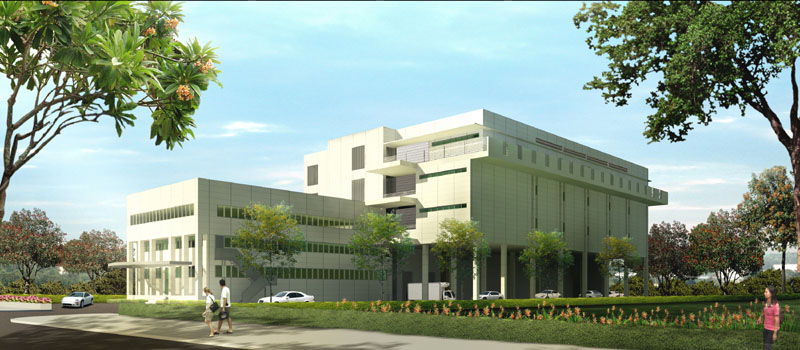
This is one of my project done in the combination of 3d Studio Max and Photoshop.
Coincidentally, the sky match the present summer season.
I hope it match your interest too!
What a sparking day at Punggol Promenade
 “Lalang” in Malay, common name has known as blady grass. This special fibre-optics Lalang lights beautifully blend in with the lalang plants along the Sungei Serangoon. It’s supported by refine metal conduit pipes, skillfully curved it with a warm and cozy feeling for park-goers.
 Besides lighting up in the night, I have another eyes for the sunlight grow on this particular lighting’s body.
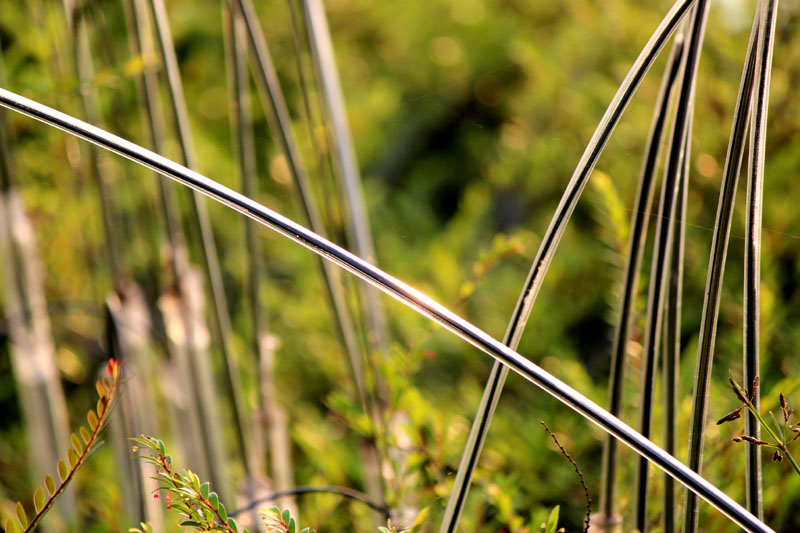 As the sun goes higher and higher, the hot spot getting brighter and brighter.
 The inner is support by metal pipes and outside wrapped by hard rubber.
 A magical blur effect beautifully blends with the assorted colors.
 Some look like stainless steel.
 Some look like gold.
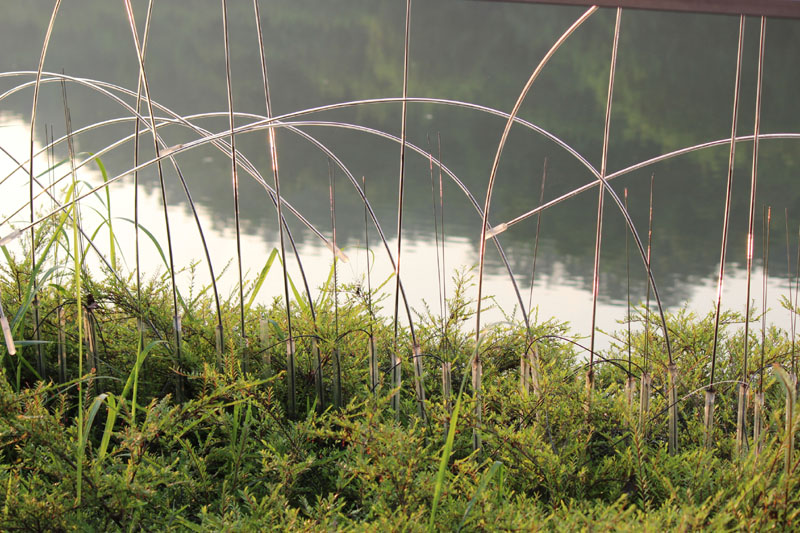 Some look like platinum.
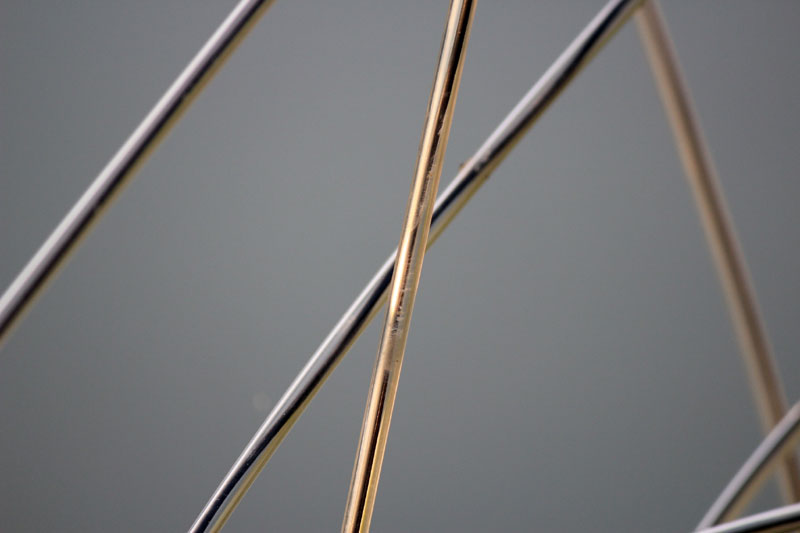 And some mixed.
 Most importantly, they are there together sharing a sparking day with us!
A big bird cage in Orchid Garden

There is a bird cage-like green house in Orchid Garden, Singapore Botanic Gardens. It almost fully covers with lash green, and Orchids are the main actors in the cage. It is not very big in size but interesting in the concept.

Before you step in and become part of the birdie in the cage, there are many different kinds of Orchid welcome you at the doorway.
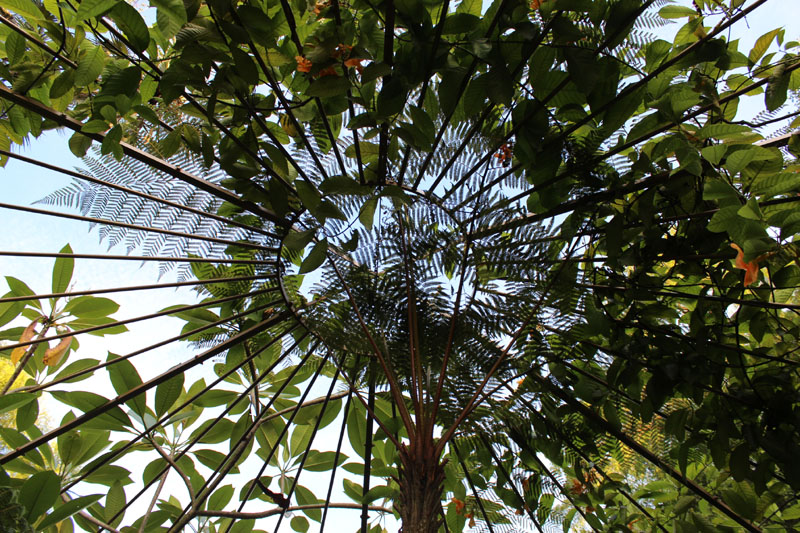
There is one fern tree right in the center of the core; act as a umbrella with a spreading arms, shading us from the sunny heat wave.

He is wearing a sock; with a branded name Orchid Renanthera, also call the Singaporeans.


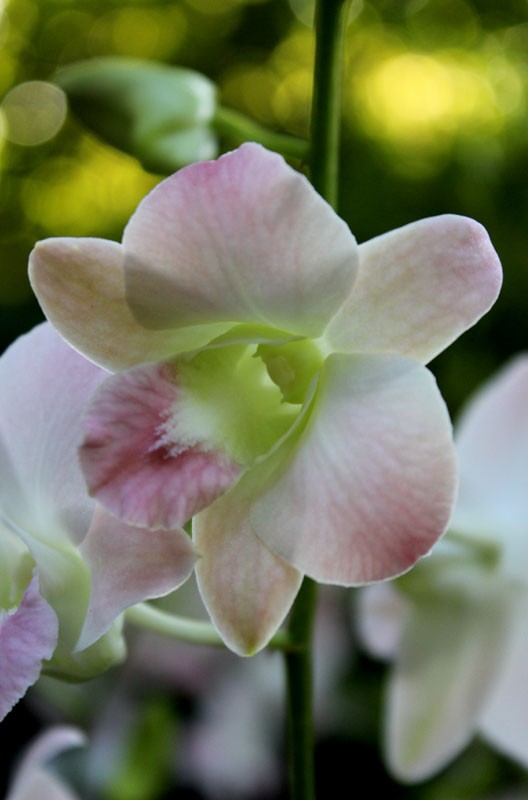
And of course many other more, that belongs to the family of the Orchid Empire.
A tale of these two sculptures outside the temple

This is snake or a tail? It is the tail of the tiger sculptures outside Sakya Muni Buddha Gaya Temple. Located at Race Course Road near Balestier Road, this temple was founded by a Thai monk, Venerable Vuttisara in 1927. In those days, ramshackle zinc, wood shelter and a Buddha statue were the initial form.
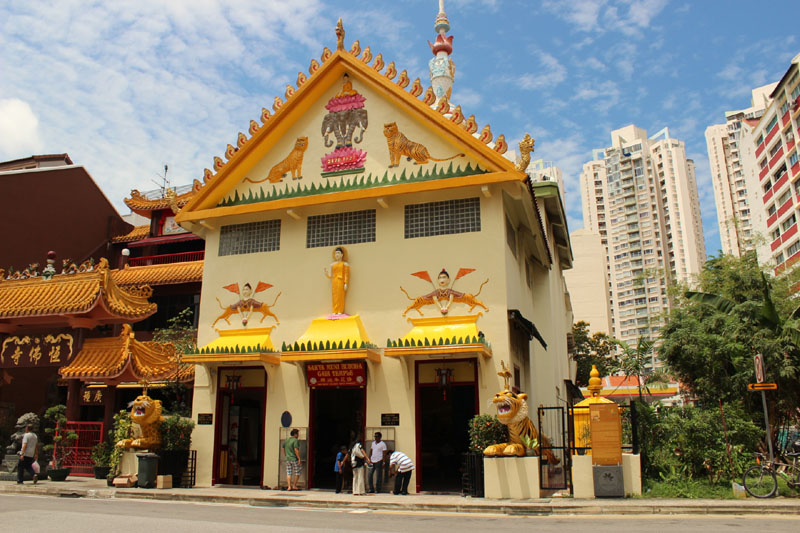
After gaining huge popularity and funded by philanthropist Aw Boon How and Aw Boon Par in 1930, the building was transformed into the grand present stage.

The hall of the temple holds the 300 tonnes Buddha statue that was surrounded by hundreds of lights, which is why the temple was named after it (The Temple of 1,000 Lights).


The philanthropist brothers, Aw Boon How and Aw Boon Par is the founders of the Tiger Balm Enterprise. “How” in Chinese dialects represent tiger and “Par” represents leopard. These two animal sculptures and motifs symbolize the spirit of the temple.

The National Heritage Board earmarked the temple as a historic site in year 2000.
No more racing on Race Course Road

Race Course Road was named after the old racecourse at Farrer Park built in 1842. It was the recreation hub for Europeans in the past and it also created jobs opportunity for the early settlers from Java and India.

While some buildings gives ways for the new. The present Race Course Road has many up and coming commercial buildings coming along the way. But some prefer to sit still just like the Leong San See Temple(龙山寺) which was built in 1917. It was popular with many Chinese immigrants who came here to offer their prayers.

Just like the Heng Fo Buddhist Temple (恒佛寺).

This historical building, “Temple of 1000 Lights” was reconstructed in 1930s with a changed of zinc roof to wood shelter.

Public housing serves as changes of an era.
The roof garden at IMM

IMM is one of the biggest shopping mall in Singapore. This mega mall comprises of a unique composition of retail, warehouse and office spaces. One attractive feature is the open sky garden that come complete with playscapes attracting shoppers for leisure entertainments. After some good cuisine from the eateries, you can step out to the roof garden finding joy and fun with your family.

This is a playground for kids and fun seekers. Water games is a wise choice for us living under a 34ºc year round summer.

Kids just can’t wait for their ‘spiritual water’ to arrive.

Free yourselves with your birthday suits in this wonderful mall.

This is a place where families have fun and bonds.

Why not spend some time to smell the flowers and look closer to these gorgeous landscapes?
Evans Lodge
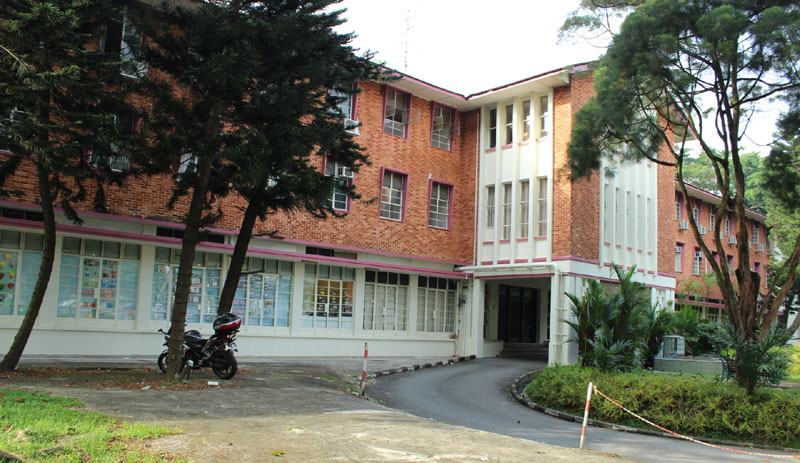 Evans Lodge is a student hostel that situated at 26 Evans Road. It is eye-catching as the exterior bear English bond brickwork makes the environment even more charming than ever.
 The protruding portion of the building stands up to speak up for the architectural perfection.
 With the enhancements of the vertical fins, it carries the upward language throughout the whole building without any doubts.
 The proportion of brick wall, color of texture is just too perfect matching the eyes of human level.
 Plantation of pine trees softens the hardiness of the concrete heart brings us a day of joy visiting this residential estate without the clutters of concrete forest.
 Don’t miss out this Indian Prata House next to it. Nice Indian cuisine and it’s open 24/7. The reason why they don’t close for business is because the doors are always open for you and the waiters are always happily waiting to serve you with their nice food!
Singapore Sport Hub is opening soon!
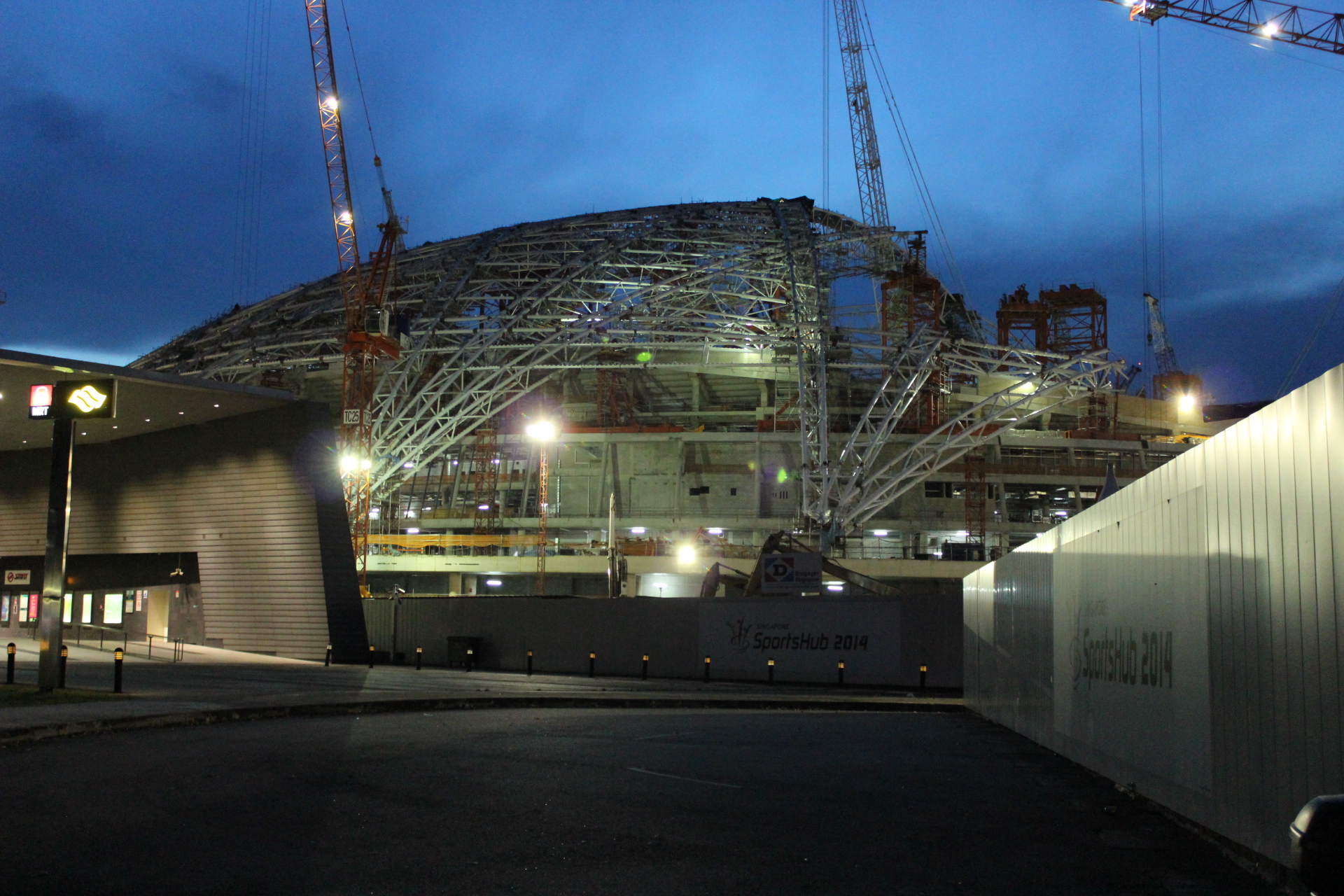
Happen to pass by the new up and coming Singapore Sport Hub. It’s still under construction and will be completed by April 2014. It is built on the original site of the National Stadium that was demolished in 2010.


The cutting edge design comes with integrated sports, entertainment and lifestyle businesses for everyone in Singapore. It focuses on integrated program on the premier land & water sports center.
With a 55,000 capacity, the retractable roof offers comfort and shady zone for supportive spectators. Indoor Aquatic Centre comes complete with leisure facilities, expandable to 6,000-capacity for specific events that meets world-class tournament. Scores of commercial spaces cater for F&B and shopping needs. Located next to Stadium MRT station, it is just stops away from Changi Airport MRT station. It comes hassle-free for sports enthusiast from all over the world touching down for tournament.
Completion is expected to be less than a year from now, can’t wait to see it open and happen!
A 300 feet long counter in this Historic Building
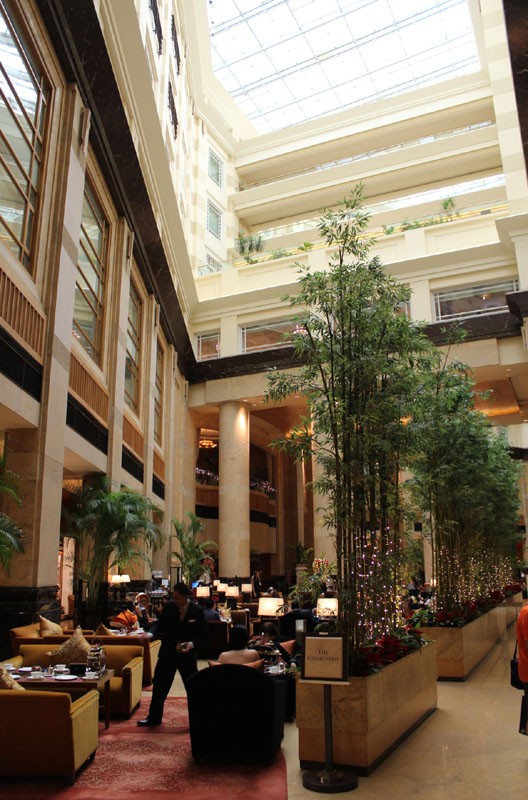
While we enjoying the sun-ray casting down through the skylight bringing down joy of the day and a smile splashing over high tea set in this Jade Restaurant. Do you have the thoughts of the nostalgic past of this General Post Office ever emerge your mind?
With thousands of incoming and outgoing mails waving at us a day, the human flow of this post office is no doubt, self-generating.

The now Fullerton Hotel was built in 1928, it was a General Post Office then. The post office was converted into a hotel in 2001 under the URA conservation plan.
In the past, postal counters used to stretch from one counter to the other. It took up to a 300 feet long, and was reputed to be the longest counter in Southeast Asia. The current location of the Jade Restaurant took the place of the former but with a very different ambience all in all.

This is a scene of a new stamp issue on 9th July 1972. The picture show a large crowd buying postage at the counters while others are affixing stamps on their ready mails.

The architectural elements of this historic building speak a story of its own early days, and it keeps going. No one can ever stop it…
37) Brother Bridges to Chinatown
There are two bridges leading us from the direction of east to Chinatown.
One is on the left, the “Elgin Bridge”, while the one on the right is “Coleman Bridge”.

Elgin Bridge was built as an unnamed footbridge in 1819. The existing bridge was built in 1929 and named after Lord Elgin (Governor-General of India). It was the first bridge across Singapore River that linked two roads to Chinatown core, South Bridge Road and North Bridge Road.

The second one is Coleman Bridge, which was built in 1840. It was the second bridge built across the Singapore River. Designed and named after an Irish, George Drumgoole Coleman, Singapore’s first architect.
In 1865, the original brick bridge was replaced by timber. And in 1886, an iron bridge was built to replace the wooden one.
To withstand the increasing heavy traffic flow, the iron bridge was finally demolished in 1986 and replaced with the present concrete bridge while the iron lamp post and railing were retained under historical conservation.
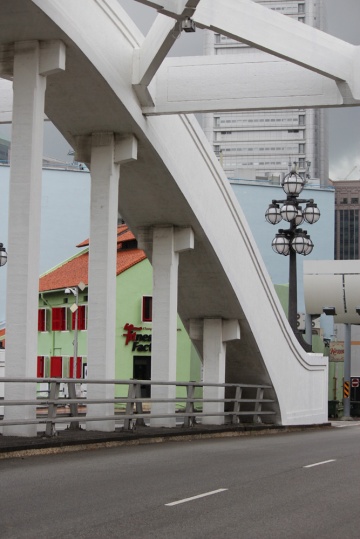
Day and night, Elgin Bridge stood still as strong as an iron man, bearing travelers without any complaints.

Ferry with tourist sight seeing the landscape of Singapore River.
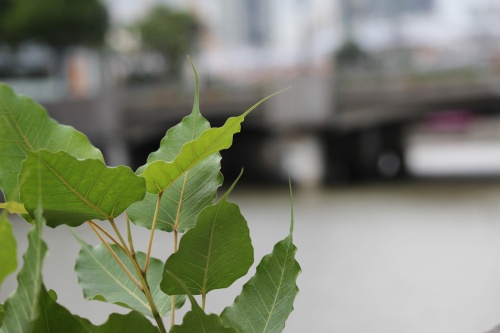
The little Bodhi tree witnessing the hustle and bustle of our footsteps and the history of the two bridges in the heart of the Singapore river.
- ← Previous
- 1
- 2
- 3
- 4
- Next →
 AddGrainOnEarth