Singapore
13) The 3 special features on a Signalized Pedestrian Crossing

Green Man+ is specially addressed to the needs to elderly and Pedestrians With Disabilities (PWD) as this group of pedestrians need more time to cross the road. This is done by tapping the CEPAS-compliant senior citizen concession card or Green Man+ card on the reader (mounted on the traffic light pole). Once the reader verifies the valid card, the system will extend ‘Green Man’ time from 3-12sec depending on the size of the crossing and volume of traffic.
This gratifying thoughts designed by LTA (Land Transport Authority) enable the needy pedestrians enough time to finish the crossing at a gentle pace.

The beeping sound pedestrians hear at pedestrian crossing also known as Pedestrian Audio Signal is to ease the visually disabled cross the road. The volume of the audio signals is adjusted automatically based on the noise level of the surrounding environment.

The Green-Man Countdown Timers indicate the amount of time left in the crossing phase. As balancing the safety of pedestrians is as important as keeping the road smooth-flowing, the timers are usually not standardized. It counts on the length of crossing, the volume of pedestrians and the density of the traffic flow.
Thus, it is good to understand the operation needs, so you wouldn’t be standing under the hot sun waiting and start punching the pole.
11) Who named the “King of Fruits”!

Regarded by many as the “King of Fruits”; durian, is native to Brunei, Indonesia and Malaysia. British naturalist, Alfred Russel Wallace famously described its flesh as “a rich custard highly flavoured with almonds”.
During his stays in Malay Archipelago (1869) Wallace described “to eat durians is a new sensation, worth a voyage to the east to experience’.

The flesh is best when it’s ripe, though it can also be consumed at various stages of ripeness. The unripe fruit makes good vegetables. It is also used to flavour wide variety of Southease Asian cuisines. The seeds can be eaten when cooked.

Durian is a spiky round or oblong husk containing pods in yellow custard-like fruit. The trees are tall and straight. Durians orchards are danger zones often covered with nets. As the fruit strikes a man in its fall is strong enough to kill.
The fruit emits a pungent distinctive odour, you either like it or hate it. It has a very unique character. Some regard it as pleasantly fragrant; others find the aroma disagreeable. The odour has led to the fruit’s banishment from hotels, airline cabin and public transportation.
It is no wonder Wallace the “father of biogeography” in the letter to Sir William Jackson Hooker stated – “If I had to fix on two only as representing the perfection of two classes, I should certainly choose the Durian and the Orange as the king and queen of fruits.”

Durian flowers are usually closed during the daytime, I believe it is because the King needs more rest than others!
12) Whom do you owe your success as a millionaire?

Millionaire: “I owe everything to my wife.”
Interviewer: “Wow, she must be some woman.
Interviewer: “What were you before you married her?”
Millionaire: “A Billionaire”
12) An Extraordinary Doctor

In National Cancer Center, Singapore, if you chanced into seeing a doctor moving around with a wheelchair, he is Dr William Tan, a medical doctor and a neuroscientist. To many, he is not only a diligent doctor but also one of Singapore Heroes.

Dr William Tan contracted polio at the age of 2 and was paralyzed from the waist down. Life was not easy for him, as his father was the only breadwinner in the family. Despite the odds, Dr William works all way out towards his dreams and challenges.
He is a wheelchair athlete and was the first person in the world to finish a wheelchair push in the Antarctica in April 2007. Same year on 19 December, Dr. William achieved another world record by becoming the fastest person in the world to complete 7 marathons across 7 continents in 27 days. This amazing race took him across countries like Antarctica, Chile, Egypt, Thailand, Japan, Kenya, Italy, England, New Zealand, and USA. Apart from all these achievements, Dr William has raise millions of funds for charity locally and internationally.

Dr William has been diagnosed with end-stage leukaemia in 2009. But with his passion in life, the bone marrow transplant operation is already a success in his mind. The disease is just another mountain to climb and conquer.

Being a sportsman, a medical doctor, a scientist and an inspirer, Dr William Tan has turned adversity to advantage. He said, “I don’t have the use of my legs but I shall make the best of my brain and my arms that are not paralyzed.” By reading so much good Dr William has done, I salute him and say “We can’t hold a candle to you, Dr William, thanks for all you have done for the community!”

10) Walking with Velcro

In 1941, a Swiss man strolling on the Alps after a hunting trip with his dog discovered the seeds of burdock that kept sticking on his clothes and dog’s fur. He examined the burrs with microscope and saw thousand of “hooks” caught on the clothes’ cotton and furs.

This man, Gerorge de Mestral, a Swiss engineer lived in Commugny, Switzerland. He spent 8 years to change the zipping world. He conceived the hook-and-loop fastener by binding two materials reversibly in a simple fashion from the beginning of cotton material to Nylon and polyester, and now even the spaceman and sportsman are practically using it.

The word Velcro is a combination of two French words velours (“velvet”) and crochet (“hook”)

Today, this handy and sticky zip become part and parcel of our live! It contributes much changes to the style of the fashion world!

Well, the next time while you are strolling in the field, just spend a little attention on nature; you may be surprised to discover what nature offer can do much to change our life.
36) How many windows are there in this building?
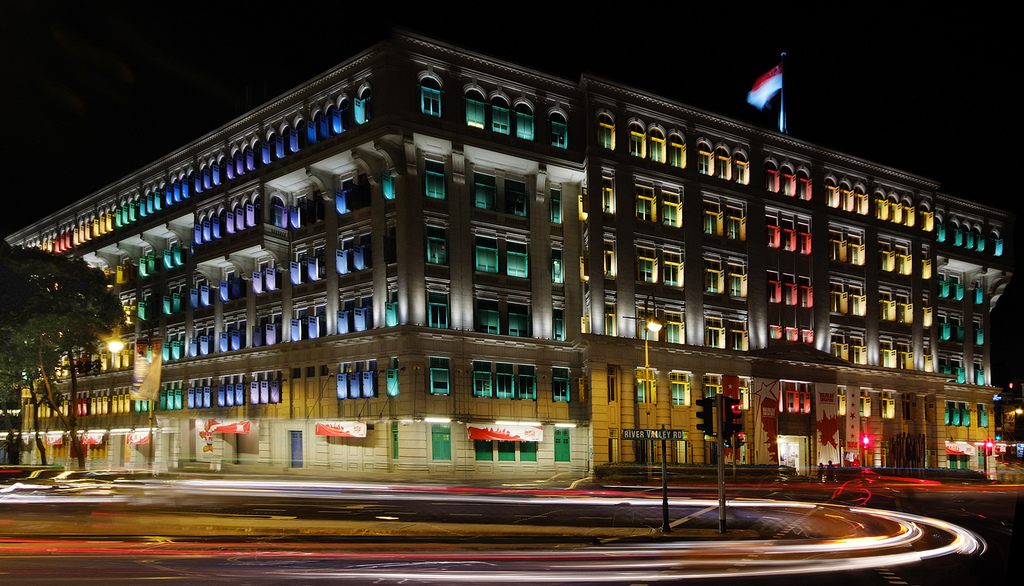
MICA Building is located at the junction of Hill Street and River Valley Road. This prominent colonial building was built in 1934. It was the largest government building and modern skyscraper at that time.
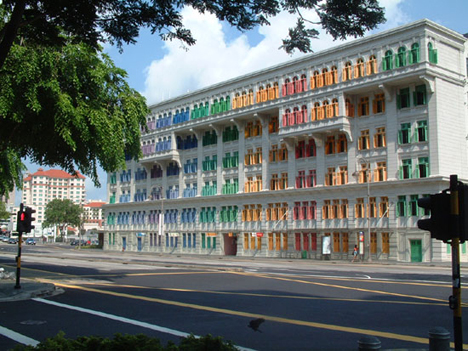
The historical building was built as a police station. To ease the entrance of the building, the steep slopes of Fort Canning Hill had to be cut back to provide access.

The colonial landmark, now home to the Ministry of Information, Communications and Arts (MICA) is also known as the Old Hill Street Police Station as it was used to house the Police Station and Barracks.

Total numbers of 927 rainbow-painted timber frame casement windows never fail to draw the attention of passerby. It makes the streetscape more lively and vibrant.
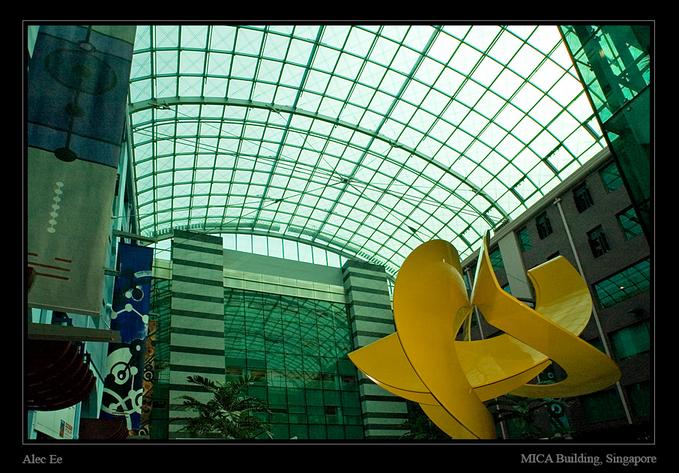
Sunlight casting through the skylight, landing on the interior exhibition gallery, not only egg-on more inspiration but gives a natural touch to art and this distinctive building.

9) A Story About A Poor Granny
This heartwarming real story happened in Indonesia. It’s regarding a judge handling a theft case. The defendant is an old frail granny from a meager family. She committed the crime as her child was sick and grandchildren were starving.
She succumbed to stealing cassavas for them. But the manager of the plantation insisted to put her behind bars, so she has to face the punishment.
After reading the sentence, Judge Marzuki took a deep breath and made the announcement. “I’m sorry Grandma, I have to abide the law. You are guilty of what you have done, you are to pay a fine of 1 million rupiah (about US$100/=) or you’ll be put behind bar for 2½ years.”

The old grandma lowered her head with grief. At this moment, the judge put away his judge’s cap, took out 1 million rupiah from his wallet and put it on his cap. He went on and spoke to the people in the front court. “Under the name of the justice, I have to sentence everyone here guilty of a fine of 50,000 rupiah (about US$5/=) as a city dweller, you let an old lady here steal for her family because of starvation.”
The honourable judge then pass his hat around for the fine to be amass by everyone including the cassava park manager.
Before the court dismissal, old grandma has been awarded a 3.5million rupiah fine. The money is used to pay up her fine. She went home with what’s left and was very touched with what has been done to her.
8) Dice your Life
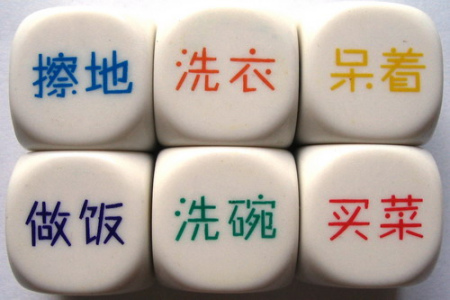
Lately, I read an article on newly wed Chinese couple born after the 80s. They have innovated a special dice. The shape does not defer much from the traditional rounded cube, rather of showing number 1-6 on the six-face dice, this one has daily activities like ‘laundry’, ‘cooking’, ‘wash dishes’, ‘buy groceries’, ‘run errand’, ‘staring blank’ etc. on the six-face dice.
The couple has to toss the die to decide their choice of house chore to be done for the day. That’s a fair deal but it could be the starting of a nightmare for the husband.
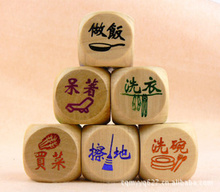
It is a popular and trendy practice among the young couple. Isn’t it an innovation, and creative idea used in an amazing way!
11) What is the difference between these 2 Sepak Takraw?
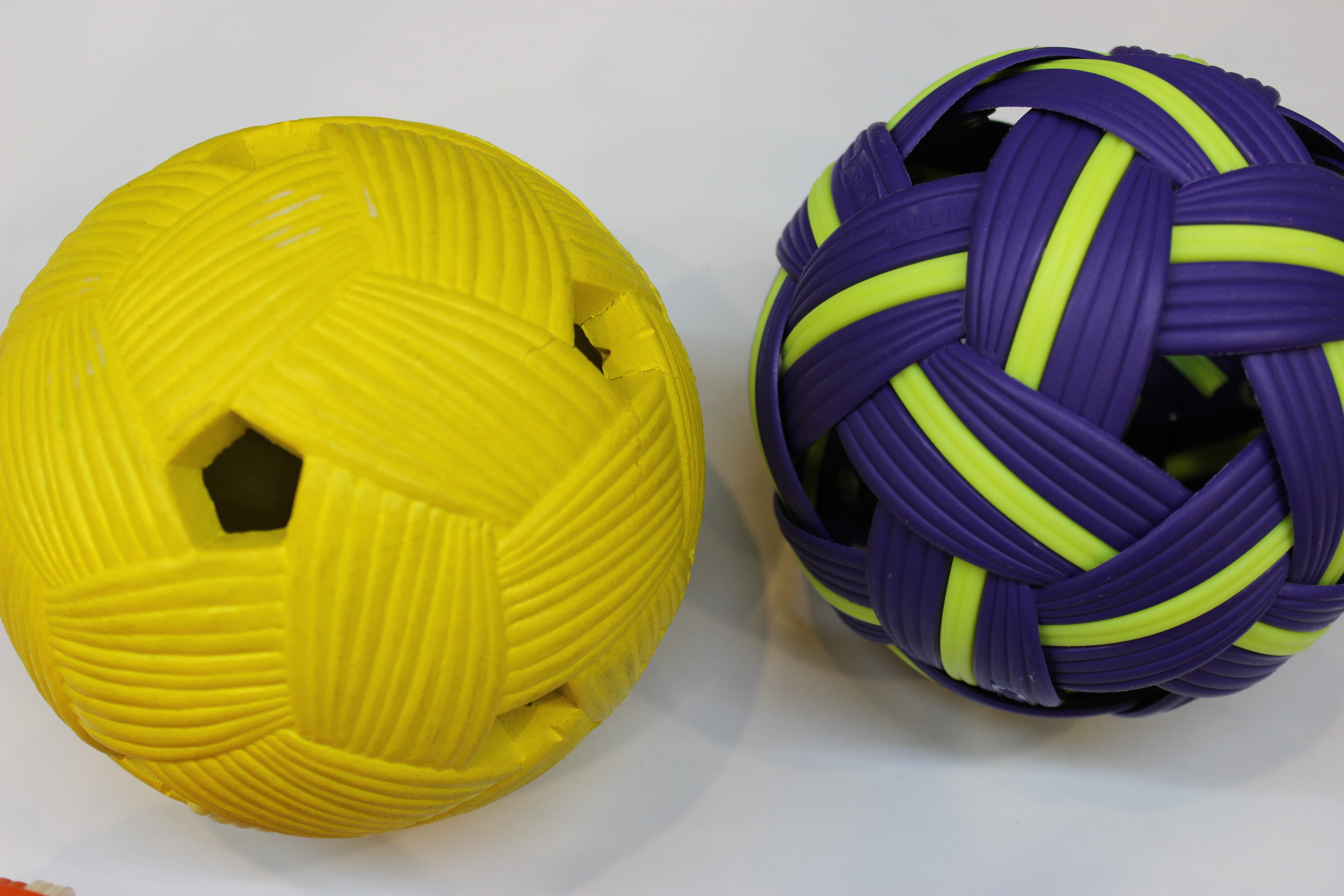
The one on the left is meant for wheelchair user and made of rubber material. The one on the right is a traditional Sepak Takraw ball that is made of rattan, thus it’s lighter and more bouncy. Unlike the traditional Sepak Takraw, the rubberized one is less springy and it requires a bit more patience and determination to master the game.

Auti Angel is the “Dancebassador” of the Abilities Expo. She is a wheelchair Hip-hop dancer and also the founder of Colours~N~Motion. Participants from all ages and genders learn the dancing skill from her.

Physical disabilities don’t set a boundary within. With the strength and determination to go beyond, dancing with free wings are the real heroes!

What sort of satisfaction and joy does one gain from sport? A medal? An accomplishment? Or just a simple game just for a simply joy?

Do you want to compete cycling with me?

 AddGrainOnEarth